Wood finishers and wood coating makers often throw around the word “urethane” like it’s a single, uniform thing. It’s not.
The word urethane is really just an umbrella term. What lives under that umbrella is the type of “poly” chain built into the chemistry and it determines how your finish will perform over time.
There are two main players you need to know: polyester urethane and water-based polycarbonate urethane.
One is the industry’s workhorse. The other is its upgrade.
Understanding the difference can make all the difference in your work.
Polyester Urethane
This is everywhere in the wood finishing world, and for good reason:
It’s cost-effective to manufacture, relatively easy to spray or brush, and delivers basic protective performance across a wide range of projects.
You’ll find it in cabinet finishes, furniture topcoats, millwork coatings, and more.
For general-purpose work where long-term aesthetics aren’t a top priority, polyester urethane can get the job done.
But here’s where it starts to show its limits, and why so many finishers eventually go looking for something better.
The Yellowing Problem
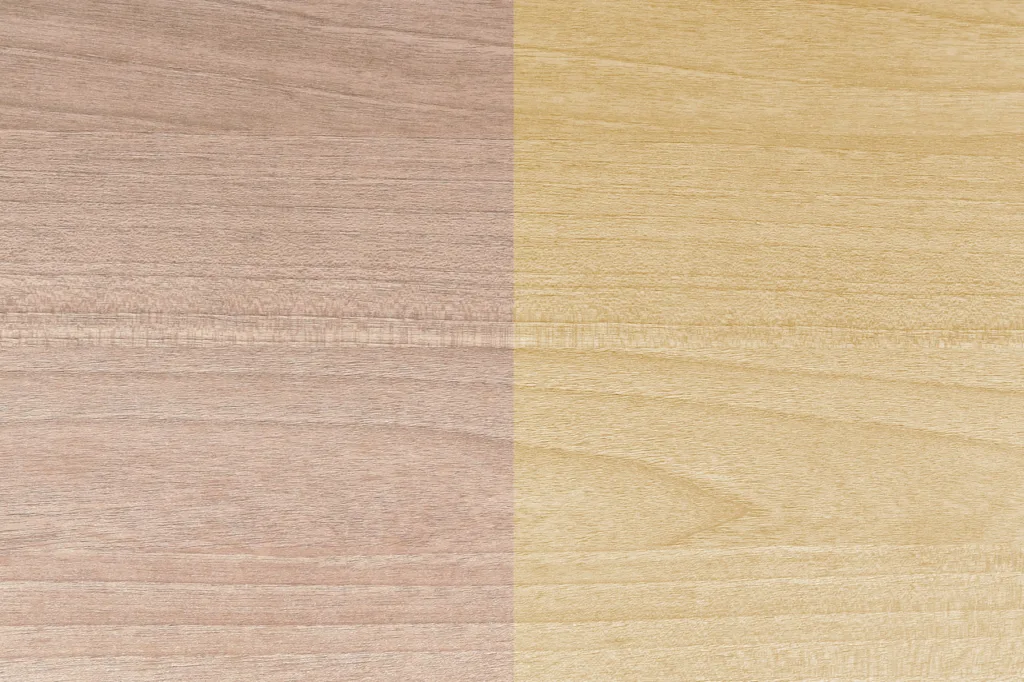
One of the most frustrating and most common complaints about polyester urethane finishes is yellowing over time.
This is especially visible on painted cabinets, white or light-gray furniture, natural-toned millwork, and exterior trim — surfaces where you’d least want it.
This yellowing isn’t a fluke or a bad batch. It’s a predictable consequence of the polyester backbone’s chemistry.
The ester linkages in polyester urethane are susceptible to UV degradation and hydrolysis, meaning exposure to sunlight and moisture gradually breaks down the polymer chain, producing discoloration.
For a white kitchen cabinet refinish, a painted exterior door, or a light-toned built-in, this isn’t just a cosmetic annoyance, it’s a warranty conversation waiting to happen.
The Water-Based Polycarbonate Urethane Difference
Polycarbonate urethane, like our EM9300, uses a carbonate linkage instead of an ester linkage.
This molecular structure is inherently more UV-stable and resistant to “hydrolytic degradation.”
Translation: you get dramatically better color retention over time.
On white-painted cabinets, natural wood tones, or any exterior wood exposed to the sun, this difference is visible and measurable.
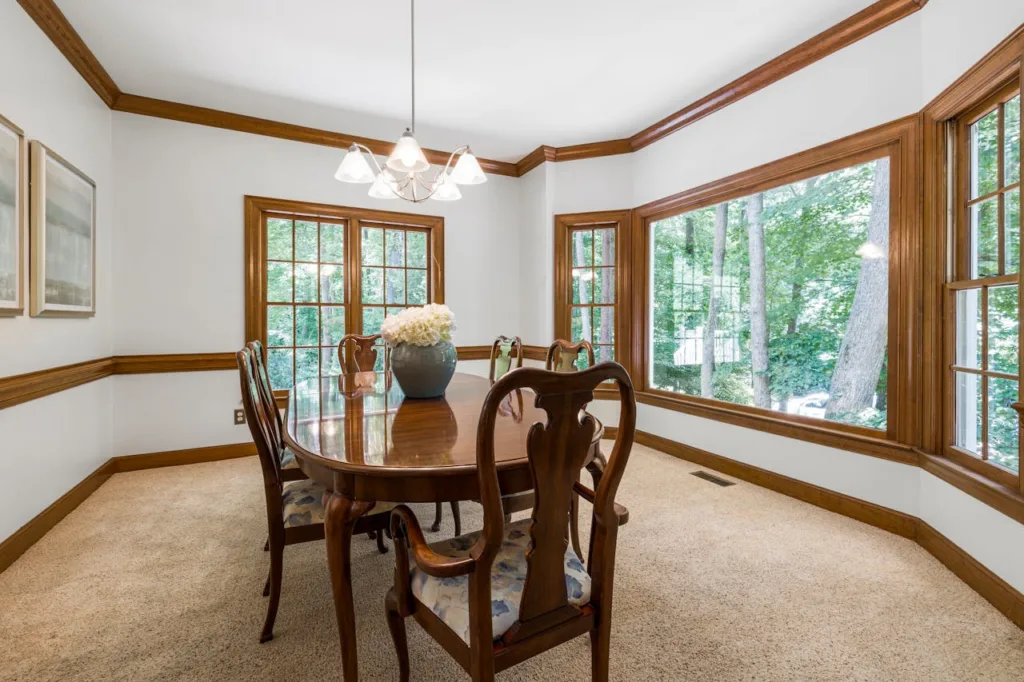
So, if your project involves light or painted colors, UV exposure, exterior applications, or any setting where long-term aesthetics matter — kitchens, entryways, outdoor furniture, sun-exposed trim — the “poly” in your urethane matters enormously.
Choosing polyester urethane for these applications isn’t wrong, but it means accepting a performance trade-off.
That’s a good place to stop for Part 1.
In Part 2, we’ll cover the differences in durability.
Part 2
Resistance to Chips, Cracks, Moisture and Chemicals
Here’s a fact that surprises many wood finishers: film hardness and overall durability are not the same thing.
For example, polyester urethane learns toward the harder end of the spectrum, but it’s also more brittle, which can be a weakness when it comes to impact.
When something strikes a polyester urethane surface with force, such as a heavy knife dropped on a tabletop or a ladder banged against exterior trim, the finish has less ability to flex and absorb that energy.
Instead, the stress is transferred directly through the film, and chips or cracks can result.
The “Shock Absorbing” Properties of Water-Based Polycarbonate Urethane
As we’ve covered earlier, water-based polycarbonate urethane is different from polyester urethane on a molecular level.
The carbonate linkage in the polymer backbone gives polycarbonate urethane a naturally higher degree of elasticity and impact absorption.
Think of it this way: polyester urethane is more like glass, and polycarbonate urethane is more like a safety lens.
Both are “hard.” But one offers a lot more “give” before breaking.

In practical terms, this means polycarbonate urethane finishes are significantly more resistant to chipping and cracking on high-use surfaces like kitchen cabinets, dining furniture, exterior doors, and painted trim.
Moisture and Cleaner Resistance of Water-Based Polycarbonate Urethane
The same ester linkage in polyester urethane that causes yellowing also creates a vulnerability to moisture and everyday cleaning products.
Ester bonds are susceptible to hydrolysis, a chemical reaction with water that slowly breaks the polymer chain apart.
Wood naturally expands and contracts with humidity, so a finish that’s already degrading may fail faster from the additional exposure to moisture in kitchens, bathrooms or exteriors.

Add routine cleaning with common household products, and you may be surprised to see how quickly cracking, clouding or peeling develops, especially at joints, edges, and end grain.
By contrast, polycarbonate urethane’s carbonate bonds are inherently more resistant to moisture and chemical exposure, which is why it’s the more durable option in these types of applications.
Part 3
When to Choose, and How to Know You’re Buying, Water-Based Polycarbonate Urethane
If you’re making a finish decision, here’s the simple framework:
Polyester urethane is a capable, cost-effective choice for lower-demand wood applications where color retention, impact resistance, and moisture exposure aren’t primary concerns.
For everything else, and especially for any combination of painted or light colors, high-use surfaces, UV exposure, exterior applications, or routine cleaning, polycarbonate urethane is the smarter investment.
How to Quickly Identify Polyester vs. Polycarbonate Urethane
Most products simply say “polyurethane” on the label. No mention of polyester. No mention of polycarbonate.
So, here are a few quick ways to know what you’re buying.
First, if you’re shopping oil-based, you are almost certainly looking at a polyester or polyether urethane. Oil-based polyurethanes are rarely (if ever) polycarbonate.
Conversely, polycarbonate urethanes exist almost exclusively in a waterborne format.
This includes our EM9300, which we purposely and clearly label as “Polycarbonate Urethane” as you can see below.
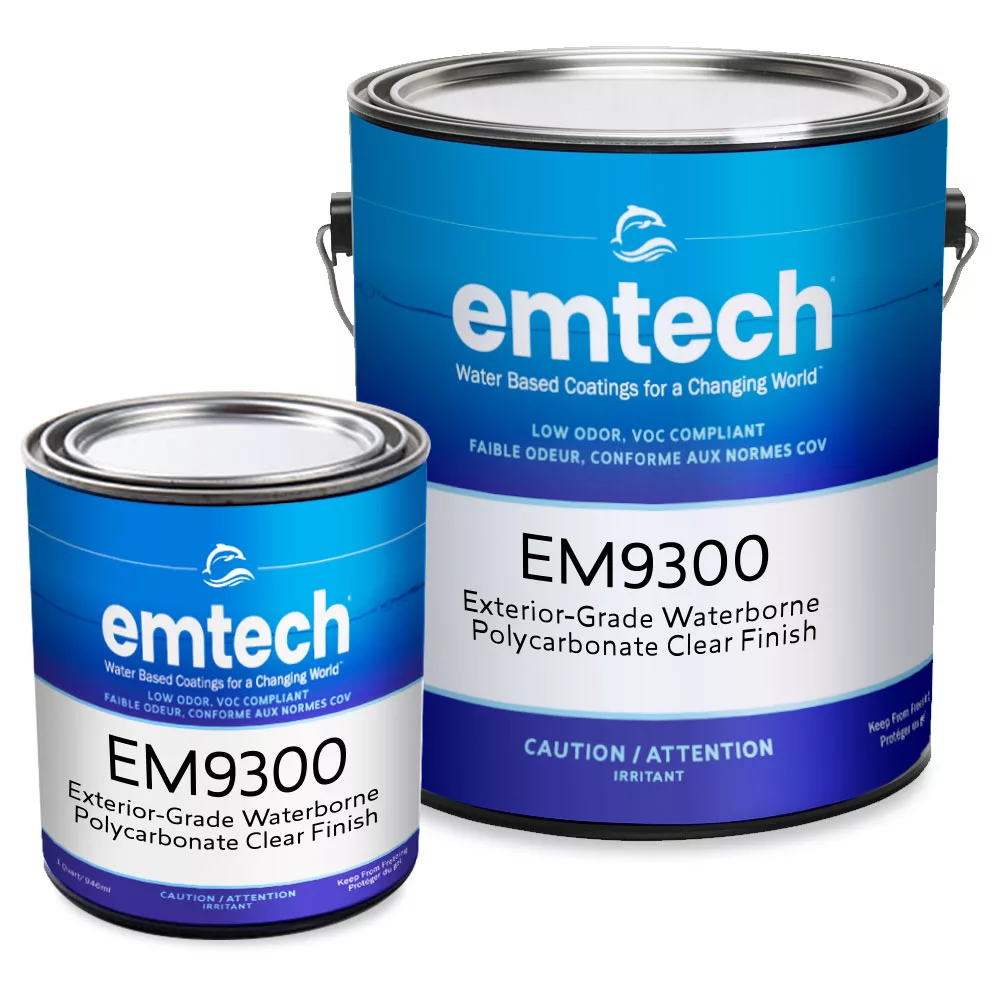
If you want to be 100% sure about the product you’re considering, here’s what you can do:
Check the Data Sheets
Look at the technical data sheet (TDS) and / or the Safety Data Sheet (SDS) for the words “polycarbonate polyol,” “polycarbonate diol,” or “PC-based” in the formulation or raw materials description.
These are the telltale indicators of a polycarbonate urethane backbone. If you see “polyester polyol” or “polyester-based,” you have your answer, too.

Ask the Manufacturer
A reputable brand should be able to tell you quickly and clearly whether their urethane is polyester- or polycarbonate-based. If the answer is vague, deflected, or buried in marketing language, that’s valuable informative in its own right. Confidence in the chemistry tends to come with transparency about it.
Note the Price
One last rule of thumb: if a product is priced significantly below comparable urethane coatings, it’s almost certainly polyester-based.
Polycarbonate polyols cost more to produce, and that difference shows up in the price.
Unusually low-cost “polyurethane” products are rarely polycarbonate urethane.
OK, that wraps up this 3-part series. As I hope I’ve shown, the “poly” in your urethane really does make a big difference.
It isn’t marketing language, it’s chemistry. Here’s to making it work for you.
Do you have any thoughts, experiences or questions on using polyester or polycarbonate urethane? Please share them in the comments section below.
Jeff Weiss is the owner and chief chemist at Target Coatings, which has been dedicated to exclusively manufacturing water-based, low-VOC and HAPs-free wood finishes for nearly 40 years. Creator of the first water-based lacquer with 100% burn-in rivaling nitrocellulose lacquer, Jeff is considered one of the “founding fathers” of water-based technology and safety for refusing to accept the “status quo” and for refusing to expose others to chemicals he wouldn’t want to be exposed to. A U.S. Air Force veteran and former volunteer EMT, Jeff has always put service and safety first. Outside of work, Jeff is an avid fly fisherman who enjoys being immersed in and inspired by Earth’s natural beauty.