
If you’ve spent any time behind a spray gun, the old argument about water-based finishes is over: the chemistry caught up.
What hasn’t caught up in a lot of shops is knowing which water-based system fits which job. A sealer dialed in for kitchen cabinets isn’t the right call for a live edge slab or a guitar top, and the wrong build sequence is how you end up re-sanding a project you should have shipped last week.
This guide breaks down water-based finishing by project type: cabinets, furniture, doors, trim, built-ins, live edge work, countertops, instruments, retail fixtures, and commercial millwork, so you can match the system to the substrate and use case instead of grabbing whatever’s already open in the spray room.
Why Project Type Matters
In addition to the visual look you’re striving for, every project puts different demands on a finish: moisture exposure, UV exposure, handling frequency, food contact, flexibility, or production volume. A system overbuilt for one job is often underbuilt for another. Getting the sealer, build coats, and topcoat sequence right for the project in front of you is what separates a finish that holds up from one that just looks fine on delivery day.
Clear Sealers, Primers, and Topcoats: What’s the Difference?
- Sealer: the first coat on bare wood. Controls absorption, locks down grain raising, enhances grain color, and gives you a sandable, uniform base.
- Primer: a pigmented sealer formulated to block substrate color, lock in grain pattern, control tannin bleed, and improve hiding power of the color coats.
- Topcoat (lacquer, varnish, or urethane): the film-building, wear-resistant layer over the sealer or primer, clear or pigmented.
- Sealer/isolator: does both jobs. It seals the substrate and also isolates incompatible layers (for example, an oil-based stain under a water-based topcoat), which matters more than most spec sheets let on when you’re mixing systems on a deadline.
Skipping the sealer step to save time is one of the most common reasons water-based finishes get blamed for what are really adhesion or absorption problems.
Part 1: The Right Finish for Cabinets, Furniture, Interior Doors, Trim & Molding
Cabinets
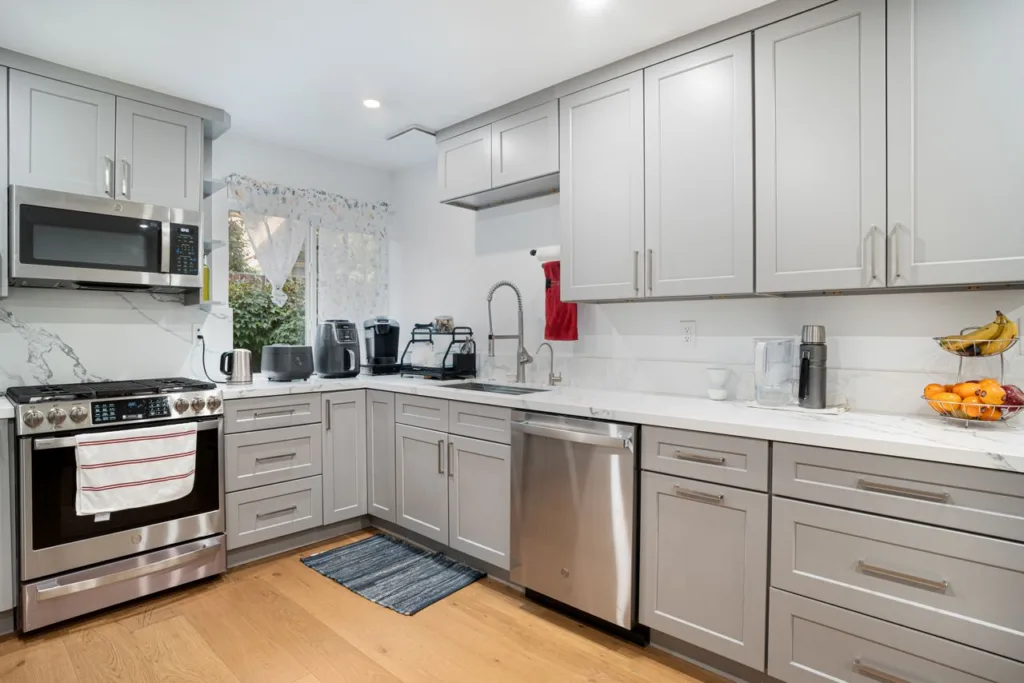
A dedicated water-based sanding sealer or primer, not straight topcoat over bare wood, is the standard for cabinet work.
Cabinet doors and face frames often see constant hand contact, moisture from cooking, and close-up scrutiny under kitchen lighting, so an even, sandable base coat matters more here than almost anywhere else in the shop.
It gives you a uniform surface that prevents the blotchy, uneven color that shows up on open-grain species like oak, ash, and maple when they’re finished without a proper seal coat.
For color work, thin the sealer 25 to 50% by volume with water to create a pre-stain conditioner that saturates the porous cell structure and helps end grain match face grain when stain goes on.
Want more control over texture on open-grain species? See our deep-dive on finishing open-grain wood.
Avoiding blotch on cabinet doors:
- Sand consistently through the grits (stop at 180 to 220 before sealer) for uniform absorption
- Apply the sealer coat reduced 25%: a heavy first coat raises grain aggressively and costs sanding time
- Scuff-sand between sealer and topcoat with 320 grit, even when the sealer feels smooth
- Choose a topcoat with a higher level of durability and chemical resistance, such as EM7000 High Build Water-Based Lacquer (remains clear) or EM8000cv Water-Based Varnish (which will color-shift to a warm hue over time) — given the level of human and chemical contact. If possible, match topcoat sheen across an entire kitchen run in one session. Batch-to-batch sheen variance is one of the most common cabinet callbacks
Furniture
A water-based sealer designed for tints and dyes lets you build custom color without muddying grain figure, something straight pigmented stain can’t do on figured woods like curly maple or quartersawn white oak.
Building color and grain clarity:
- Wash-coat or seal first to even out absorption, especially on figured or blotch-prone species
- Build color in thin, controlled layers with water-soluble dyes rather than one heavy stain pass
- Seal again lightly between multiple tint passes so each color layer has a stable base
- Topcoat with a compatible water-based varnish (e.g., EM8000cv) or water-based lacquer (e.g., EM7000 High-Build Spray Lacquer) once color is locked in
For furniture in daily use, tables, dressers, chairs, durability comes from the full build sequence, not the chemistry alone. Most field failures trace back to an underbuilt film.
Interior Doors
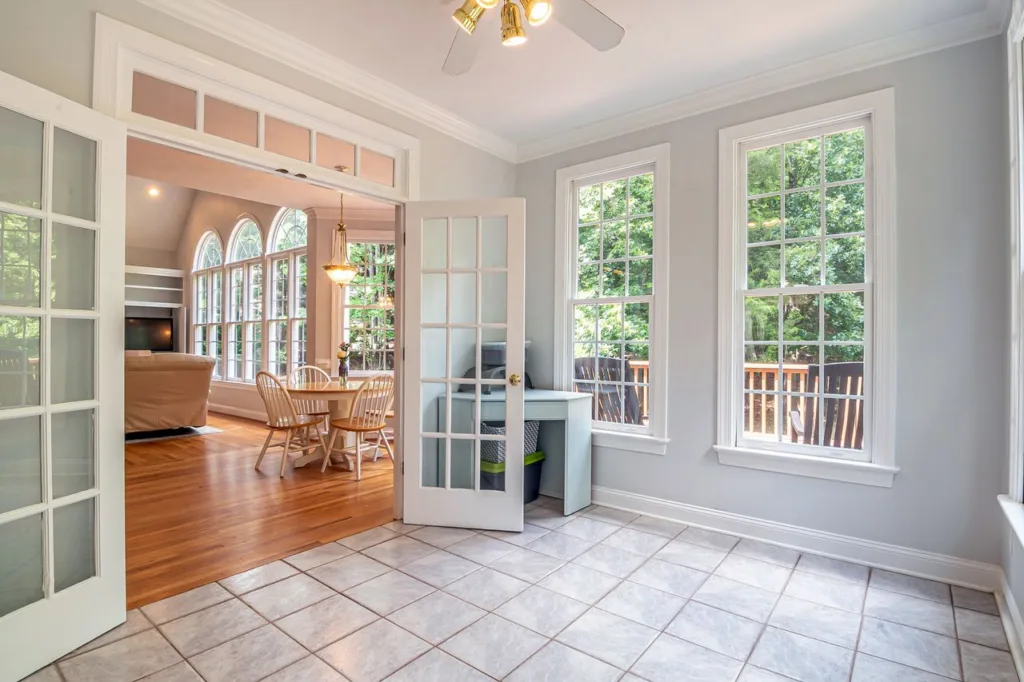
Water-based finish’s fast recoat time is the real advantage here: two or three coats in a single day, which matters on multi-door jobs and renovation timelines.
Your topcoat choice will likely be similar to cabinets — prioritize film build and durability, especially near hardware and edges, where hands and shoes make repeated contact. Our EM8000cv is a topcoat that checks this box beautifully and is suitable for interiors and exteriors.
Sheen consistency across a home matters. Inconsistent sheen between adjoining rooms with shared sightlines is one of the most common client complaints on interior finish work. Mix your topcoat in batches large enough to cover matching door sets in one pass, and let doors cure fully before stacking or hanging to avoid witness marks.
Trim & Molding
A 20-foot baseboard run has nowhere to hide an uneven sheen or a lap mark, which makes trim the category that most exposes an inconsistent process.
- Pre-finish off-site or in a controlled booth whenever the job allows it. Field-finished trim is harder to keep consistent, especially in humid or dusty site conditions
- Seal end grain on miters and returns before install; unsealed end grain absorbs differently and shows as a dark or dull spot
| Method | Pros | Cons |
| Spray | Even film, faster on long runs, best sheen consistency | Requires booth or controlled overspray area |
| Brush | No equipment needed, good for touch-ups and field repairs | Harder to keep sheen and film build consistent over long runs |
Spraying is standard for shop-run trim packages; brushing is generally reserved for site touch-ups after install.
Whether you’re planning to paint, stain or maintain the wood’s natural look, you’ll generally want to topcoat your trim / molding with a coating that adds durability to protect against kicks, bumps, and scuffs from daily life.
If you like to see an ambering effect over time, consider a water-based alkyd varnish like our EM2000.
If not, consider a product like our EM9300 Water-Based Urethane. It adds durability, UV protection and remains clear.
Part 2: The Right Finish for Built-Ins, Live-Edge Tables, Countertops and Musical Instruments
Built ins
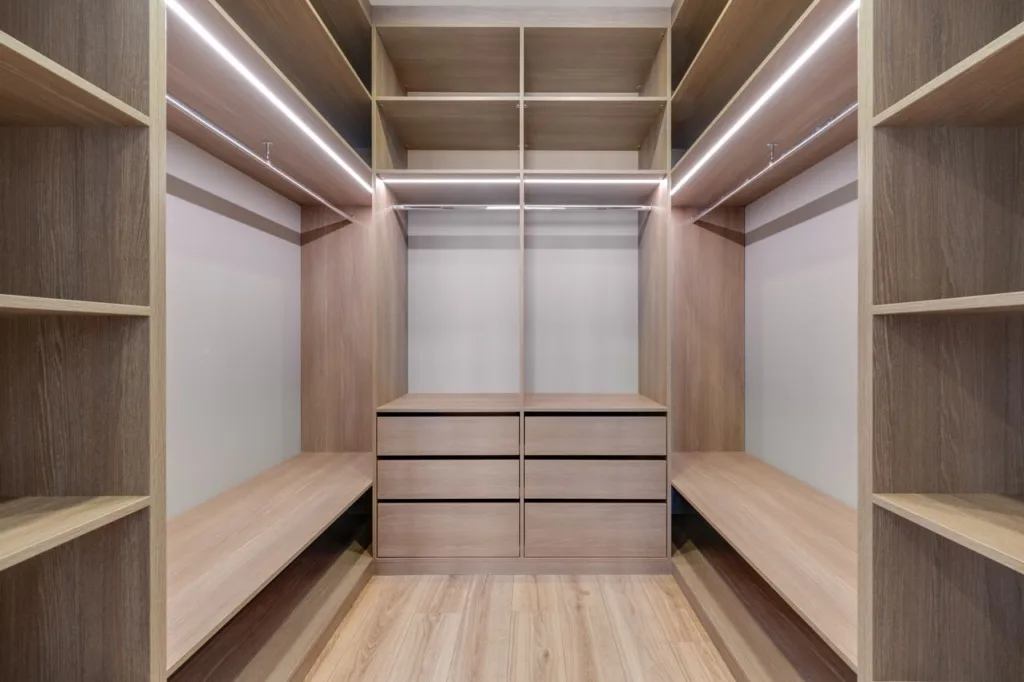
Built-ins are installed like millwork but often need to match furniture-grade cabinetry sitting right next to them, so the finish has to bridge two different quality expectations.
- Finish components before install where possible for better film control and no overspray risk to floors, walls, and trim
- When finishing in place is unavoidable, plan for more masking, ventilation, and dry-time patience. Water-based finish’s low odor is a real advantage in occupied homes
- Pull a sample from the same lot of sealer and topcoat used on adjacent cabinetry, not just the same product line, to avoid batch-to-batch color drift
- Test sheen and color on an offcut of the actual substrate first: plywood, MDF, and solid stock all take sealer slightly differently
Live Edge Tables
Live edge work demands a deep, glass-like film alongside careful handling of bark edges and natural voids that don’t behave like flat, milled lumber.
Two-part epoxy used as a low-build sealer or as a high-build/bartop finish can destabilize the encapsulated wood if the piece isn’t properly sealed first, sometimes cracking the length of the tabletop. Not all epoxy resins are equal; select the one specified for the project.
Bark and live-edge transitions are inconsistent in density and absorption compared to the milled face, so they need extra sealer attention, often an additional coat or slower application, to avoid drinking finish unevenly and drying dull next to a glossy field.
Water-based systems’ fast recoat window is a genuine advantage here: a slab table can need six or more coats to hit real depth, and you’re not losing days between layers.
Wood Countertops
Is water-based finish food-safe for countertops? Once fully cured, many water-based finishes are food-safe for general countertop use, though direct cutting surfaces typically still call for a food-safe oil/wax maintenance routine rather than relying on the film finish alone. Always confirm food-contact suitability on the specific product’s technical data sheet before specifying it for a cutting surface.
- Build enough film thickness to resist standing water around sinks and edges. A single thin coat won’t hold up on a working countertop
- Seal end grain and cutouts (sink openings, faucet holes) as thoroughly as the top face; that’s where water intrusion actually starts
- Set client expectations on maintenance. Even a well-built finish benefits from periodic recoating
Musical Instruments

Water-based systems have made some of their biggest inroads here over the past two decades. Fast dry times mean less shop time per instrument, low odor matters in small unventilated shops, and water-based finishes avoid the amber cast oil-based lacquers impart, important for builders who want spruce or flame maple to read true.
Instrument builders favor thinner overall film builds than furniture or cabinet work, since excess finish mass can dampen resonance on acoustic instruments. Our Emtech EM6000 Production Lacquer has been a favorite topcoat among guitar finishers for years because it allows them to dial-in the right number of coats for the exact look, sound and durability they want.
This is one category where the sealer step isn’t optional: bare tonewood finished directly with a topcoat is far more prone to uneven absorption and visible grain distortion than a properly sealed one.
That’s a good place to stop for Part 2.
In Part 3, we’ll cover retail fixtures, commercial millwork, FAQs, and we’ll summarize everything into a comparison table for easy reference.
Part 3 – Retail Fixtures, Commercial Millwork, Summary Comparison Table and FAQS
Retail Fixtures

Retail fixtures get handled constantly, cleaned with commercial products, and are expected to still look new after months of customer traffic.
- Prioritize film durability and chemical resistance with topcoats such as Emtech EM8000 Conversion Varnish or EMCAT+ EC2A Acrylic Resin Topcoat. Retail fixtures get touched, moved, bumped and wiped down far more often than residential furniture
- Keep film build consistent at corners, edges, and shelf lips, the highest-wear zones, not just flat display surfaces
- Water-based coatings’ short recoat windows are often the only way to hit multi-coat specs on tight store-opening deadlines.
- Low odor matters when fixtures are finished near an active retail space or shared production floor
Commercial Millwork
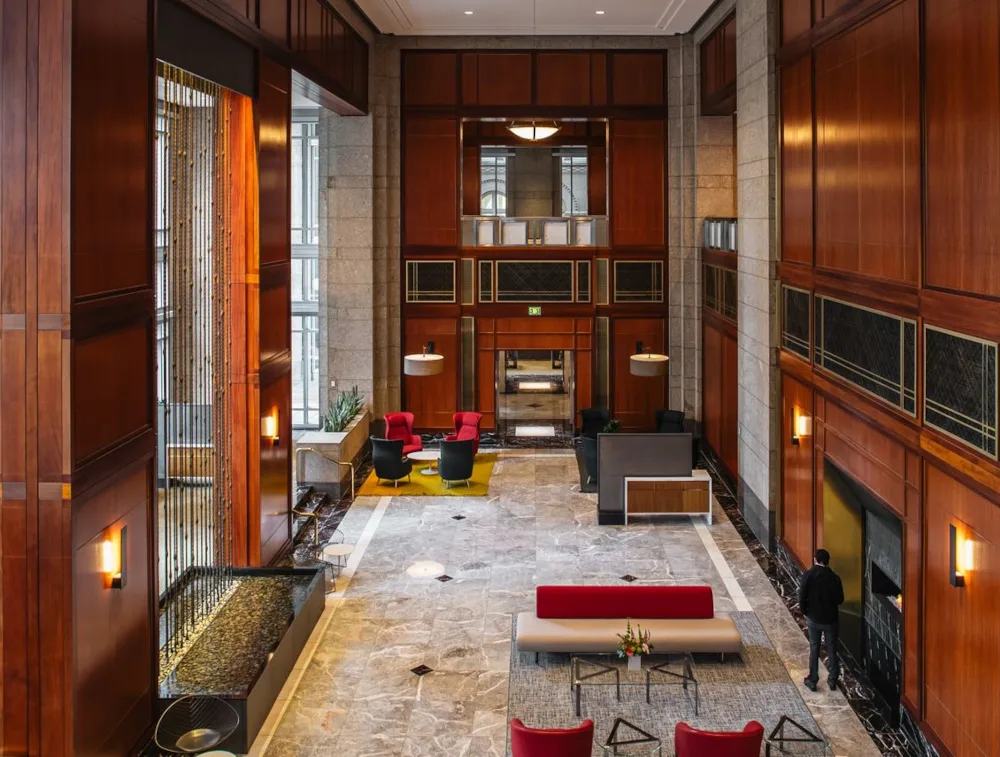
On commercial jobs, the sealer-and-topcoat combination needs to be documented as a system, not picked independently.
A sealer/isolator built as part of a complete finishing system simplifies that specification because layer compatibility is already engineered in, rather than tested on the fly on a live job.
| Consideration | Why It Matters on Commercial Jobs |
| VOC compliance | Many commercial/institutional projects require low-VOC or HAPs-free systems for code or LEED-style specs |
| Batch consistency | Large casework runs need matched sheen and color across dozens or hundreds of units |
| Documentation | Architects and GCs often require technical data sheets and system compatibility on file before approving a spec |
| Production speed | Fast recoat times directly affect whether a shop can hit large-volume delivery deadlines |
For millwork shops bidding competitively, the ability to document a compliant, repeatable system is increasingly a job-winning factor, not just a technical preference.
Comparison Table: Water-Based Finish by Project Type
| Project Type | Recommended Finish Layer | Typical Sheen | Key Consideration |
| Cabinets | Sanding sealer + topcoat | Satin to semi-gloss | Even absorption, blotch control |
| Furniture | Sealer + tint/dye + topcoat | Satin to gloss | Grain clarity, color control |
| Interior Doors | Sealer + topcoat | Semi-gloss | Sheen consistency room to room |
| Trim & Molding | Sealer + topcoat | Satin to semi-gloss | Consistency across long runs |
| Built-Ins | Sealer + topcoat | Matched to adjacent cabinetry | Batch-matching color and sheen |
| Live Edge Tables | Multiple sealer + build coats | Gloss | Bark/edge absorption, film depth |
| Wood Countertops | Sealer + food-safe rated topcoat | Satin to gloss | Water and heat resistance |
| Musical Instruments | Thin sealer + thin topcoat layers | Gloss (typically) | Minimal film mass, tonal impact |
| Retail Fixtures | Sealer + hard, chemical-resistant topcoat | Satin to semi-gloss | Cleaning durability, fast turnaround |
| Commercial Millwork | Documented sealer/isolator + topcoat system | Per spec | Code compliance, batch consistency |
Frequently Asked Questions
What is the best water-based finish for cabinets? A dedicated water-based sanding sealer applied before topcoat is the standard. It controls absorption and prevents the blotching that shows up on open-grain species when finish goes on bare wood.
Is water-based finish good for furniture? Yes. Water-based sealers and topcoats give strong grain clarity and color control, and modern formulations hold up well to everyday handling when the full build sequence is followed.
Can you use water-based finish on interior doors? Yes, doors are one of the better applications, since fast recoat times let multi-door jobs move through several coats in a single day.
What’s the best finish for a live edge table? Several thin water-based topcoat layers over a properly sealed surface, with extra sealer attention on bark and edge transitions.
Is water-based finish food safe for countertops? Many cured water-based finishes are food-safe for general countertop use. Check the specific product’s technical data sheet for food-contact ratings, especially for cutting surfaces.
Do you need a sealer before applying a water-based topcoat? For nearly every project type covered above, yes. It controls absorption, reduces grain raising, and improves adhesion. Skipping it is one of the most common causes of uneven or failed finishes.
What finish do luthiers use on guitars? Many builders now use thin-build water-based sealer and topcoat systems, favored for low odor, fast dry times, and minimal impact on tonal resonance.
How do commercial millwork shops finish wood at scale? Typically by specifying a documented sealer-and-topcoat system rather than combining products ad hoc, prioritizing VOC compliance, batch consistency, and production speed across large runs.
Final Recommendations
Across every category above, the pattern holds: the sealer step is what separates a finish that performs long term from one that just looks fine on delivery day.
Cabinets need it to control blotching, live edge slabs need it to handle uneven bark absorption, instruments need it thin enough to protect tone, and commercial millwork needs it documented as part of a compliant system.
Get the sealer and topcoat sequence right for the project in front of you, and the rest of the process gets a lot more predictable.
If you’re refining your shop’s finish system, browse our full lineup of water-based wood sealers built for these project types, from cabinet-grade sanding sealers to sealer/isolator systems designed for demanding commercial specs.
For now, I’d love to hear your experiences, comments or questions about the finishes and schedules you use for the work you do.
Please share your thoughts or read what others are saying in the comments section below.
Jeff Weiss is the owner and chief chemist at Target Coatings, which has been dedicated to exclusively manufacturing water-based, low-VOC and HAPs-free wood finishes for nearly 40 years. Creator of the first water-based lacquer with 100% burn-in rivaling nitrocellulose lacquer, Jeff is considered one of the “founding fathers” of water-based technology and safety for refusing to accept the “status quo” and for refusing to expose others to chemicals he wouldn’t want to be exposed to. A U.S. Air Force veteran and former volunteer EMT, Jeff has always put service and safety first. Outside of work, Jeff is an avid fly fisherman who enjoys being immersed in and inspired by Earth’s natural beauty.

Jeff: As you are aware, I transitioned to your water-based system back in the early-mid 2010’s. The clarity and non yellowing character of the em6000 system really made the wood qualities pop! I have built both F-style mandolins and various sizes and styles of acoustic guitars, as well as a few LP electrics. All have aged well, with no to very modest color shift towards yellow. My earlier builds that were finished with traditional nitrocellulose lacquer have all color shifted noticeably. Being an air quality chemist (ph.d.’90) I am so glad to eliminate the harsh odors and the solvent exposure (let alone the toxicity issues) that oil based lacquers provided. That your acrylic lacquers can perform BETTER than NCL in all physical performance measures is icing on the cake. BTW, just so your readers know, my work history includes improving the chemistry of paint systems for a major automotive manufacturer!
Mark – Thank you for sharing your comments with our readers. Yes, EM6000 Production Lacquer is a very versatile, easy to use water-based acrylic lacquer wood finish.
Please feel free to share images of your finished products with us.
-JEffW-